
How Often Pressure Wash Commercial Building Walls in Broward
November 4, 2026
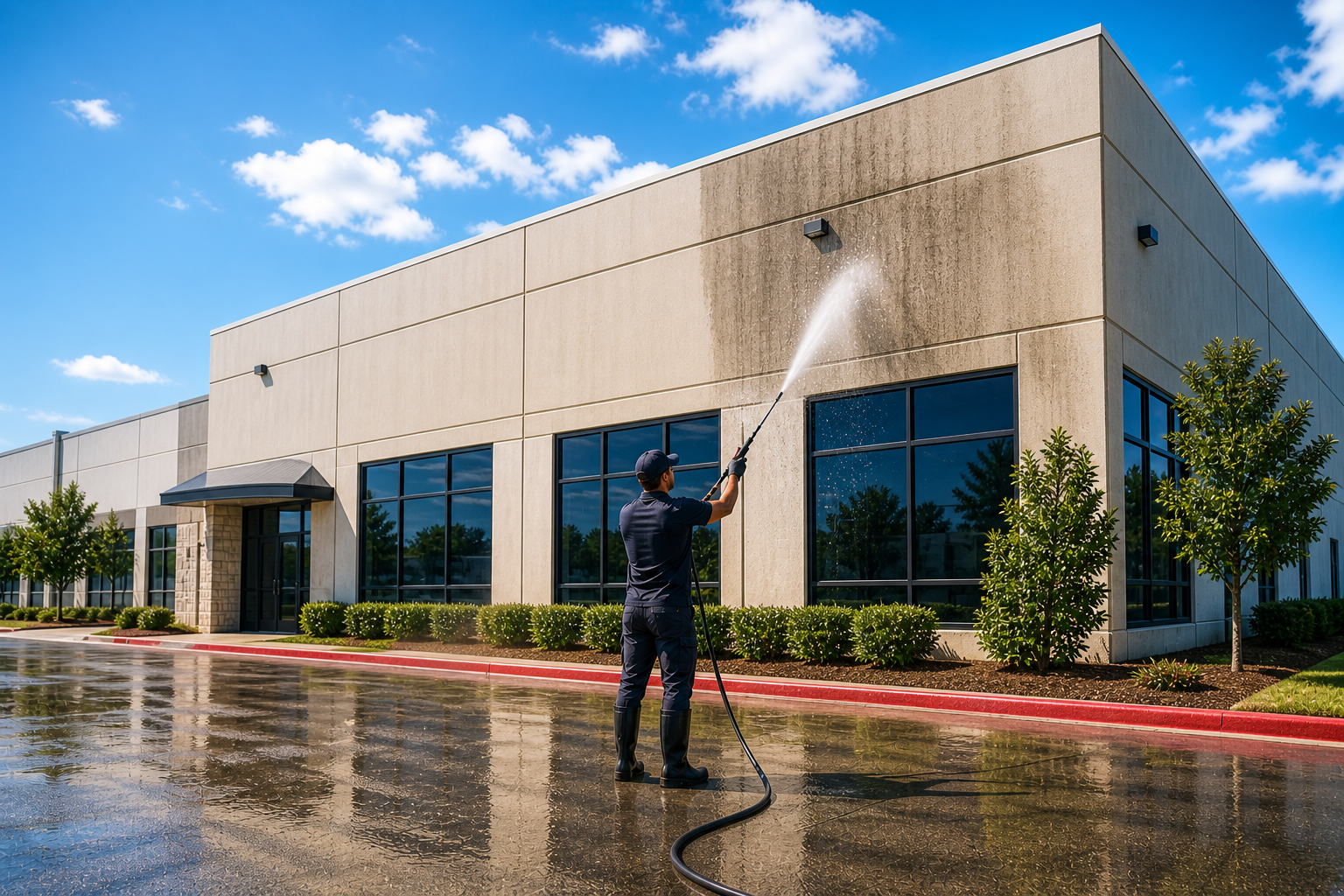
South Florida heat, salt air, and relentless humidity mean most commercial properties in Broward County need exterior washing every six to twelve months. High-traffic touchpoints like entrance walkways, drive-throughs, and dumpster pads require quarterly or monthly service to eliminate slip hazards and stay compliant with local codes. Routine maintenance prevents permanent stucco discoloration, paint failure, and costly concrete degradation.
Why Broward County Commercial Properties Face Unique Exterior Wear
Commercial structures in South Florida face some of the harshest environmental wear in the nation. Between intense UV rays, persistent ocean breezes carrying airborne salt, and near-daily summer thunderstorms, building surfaces take a constant beating. From Fort Lauderdale high-rises down to retail plazas in Hollywood and industrial parks in Pompano Beach, exterior walls trap moisture and airborne contaminants every day.
Algae, mold, and Gloeocapsa magma thrive in our tropical sub-climate. When humidity hovers above 80 percent, organic spores latch onto porous surfaces like stucco, split-face block, and exposed aggregate concrete. Left unchecked, black and green streaks spread across parapets, overhangs, and shading walls within weeks. Airborne salt accelerates the degradation by drawing moisture into surface pores, which causes hairline paint cracks to flake and peel prematurely. If you manage coastal commercial assets, reading up on coastal building maintenance and salt spray in Broward will help you understand just how quickly ocean winds corrode standard exterior coatings. Without scheduled washing, routine grime turns into deep chemical deterioration that damages your building envelope.
Recommended Washing Schedules by Commercial Surface Type
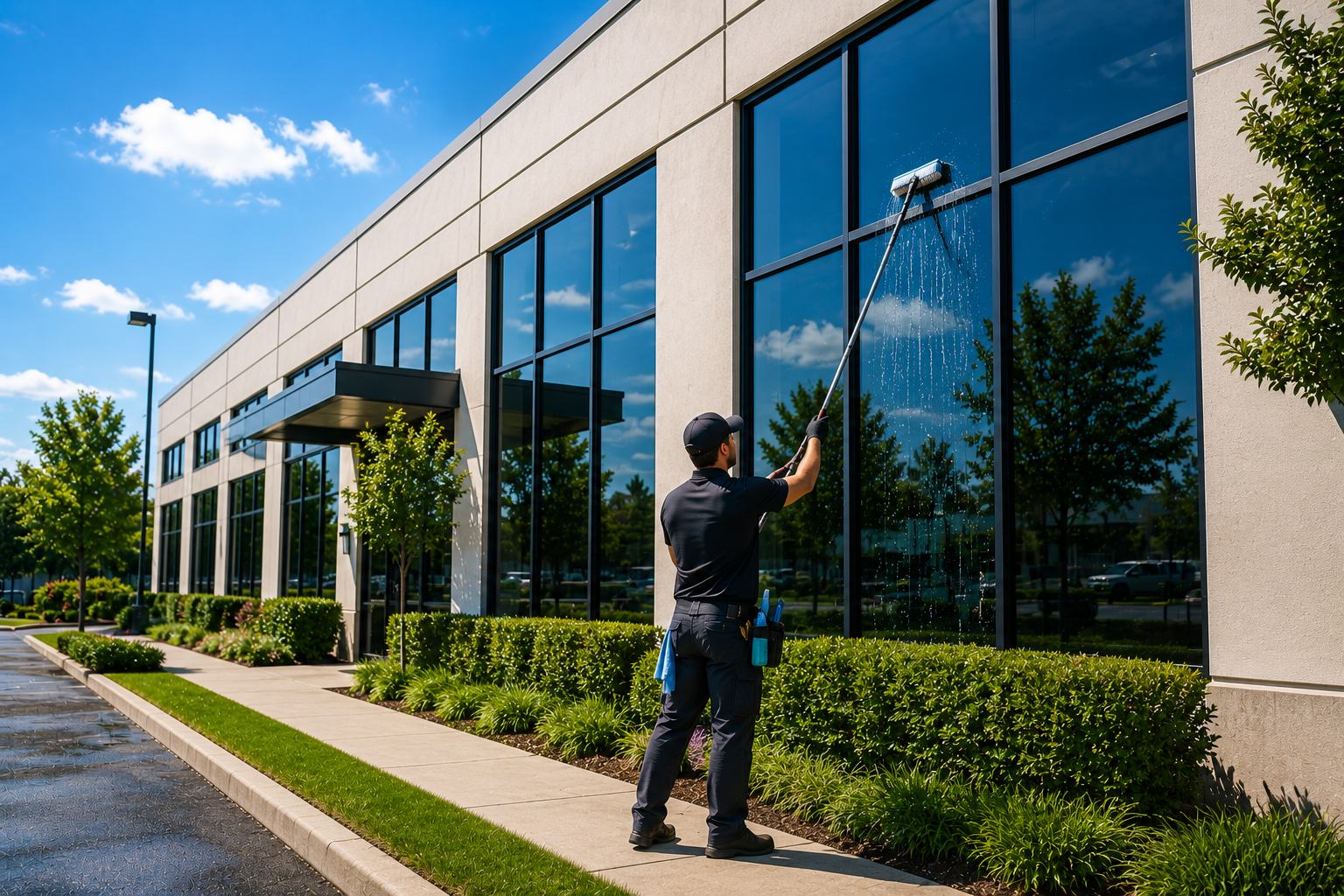
Every zone of your property experiences different wear patterns, traffic loads, and moisture exposure. A blanket annual wash rarely cuts it for a working retail center or multi-tenant office building. Setting tailored maintenance intervals for each surface keeps costs predictable and preserves property value.
For vertical exterior facades, professional commercial building washing once or twice a year keeps stucco and painted surfaces clean and vibrant. Properties west of I-95 near the Everglades usually fight heavy green algae blooms, requiring semi-annual attention, while inland office complexes sheltered from wind can often stretch to annual wash cycles.
Flatwork demands a much tighter timeline. Sidewalks and main entry plazas collect dropped soda, food stains, shoe scuffs, and foot grease that create serious slip risks. You should pressure wash these areas every month or quarter depending on foot traffic volume. Parking garages and asphalt surfaces benefit from semi-annual parking lot cleaning to break down motor oil, transmission fluids, and tire marks before they stain the pavement permanently. Meanwhile, restaurant grease pads and trash enclosures require monthly dumpster pad cleaning with high-heat equipment to comply with county health codes and eliminate pest attractions.
If managing your property's exterior wash schedule feels like a headache, book a free quote and we'll handle the timing for you.
Clear Signs Your Commercial Building Needs Immediate Washing
Scheduled intervals give you a great baseline, but weather anomalies and sudden traffic spikes can force an earlier wash. Facility managers should watch for telltale warnings across the building footprint during regular property walks.
Look closely at your drainage pathways and shaded northern walls. If you spot dark greenish-black patches along the base of the stucco, mildew has taken root. When rain hits these patches, the spores produce slick biofilms that spill onto adjacent walkways, creating major trip-and-fall hazards. Property managers who ignore these warning signs face real legal exposure, as discussed in our guide on mold mildew commercial liability for Davie properties.
Other red flags include spider webs and insect nests packing the soffits, chalky white efflorescence leaching through concrete seams, and gray tire soot darkening your delivery bays. If water beads show oily sheens across your parking bays after an afternoon downpour, grease buildup has reached hazardous levels and needs hot-water surface washing right away.
Why In-House Maintenance Staff Shouldn't Handle Exterior Washing
Handing a pressure washer to your on-site janitorial or maintenance crew seems like an easy way to save money, but it usually backfires. Commercial-grade exterior cleaning requires specialized chemistry, precise pressure control, and strict compliance with environmental regulations.
Broward County and local municipal codes enforce strict Clean Water Act rules regarding wastewater runoff. Letting wash water packed with motor oil, degreasers, or harsh bleach run into storm drains can trigger substantial fines from environmental code officers. Professional contractors capture, block, or divert runoff using specialized berms and filtration systems.
Safety and surface preservation create another major hurdle. Sending internal staff up ladders with high-recoil wands creates immense workers' compensation liability. Inexperienced operators frequently etch decorative concrete by holding high-pressure nozzles too close, or they blow water behind commercial stucco and EIFS panels, ruining interior drywall and insulation. Professional crews carry commercial liability coverage and use calibrated equipment that cleans without destroying building substrates.
Call us at +1 754-253-5827 for a same-day estimate tailored to your square footage.
What Coastal Surface Experts Does Differently
At Coastal Surface Experts, we don't just blast cold water at your building and call it a day. We evaluate each substrate on your Pompano Beach or Fort Lauderdale property to choose the safest, most effective cleaning method.
We clean exterior building walls using professional soft washing technology. This approach uses high-volume, low-pressure delivery combined with eco-responsible, commercial-grade detergents. The solutions kill mold, algae, and lichen at their root structure without driving water behind building seals or scarring delicate paint. The finish stays clean up to three times longer than traditional high-pressure blasting because the spores are completely eradicated rather than just pushed around.
For flat concrete, entryways, and loading zones, we deploy industrial hot-water pressure units reaching 200 degrees. High heat cuts through heavy engine oils, food grease, and stubborn chewing gum instantly, while our rotary surface cleaners deliver a uniform stripe-free finish. We work around your operating hours, including nights and weekends, so your clients and tenants never experience interruptions or wet walkways during business hours.
Common Commercial Pressure Washing Mistakes to Avoid
Property managers often make simple missteps that drive up maintenance bills over time. The most frequent error is relying on pressure alone rather than proper detergents. Blasting concrete or stucco with 4,000 PSI strips away sealers and leaves visible zebra stripes across the surface that trap future dirt even faster.
Another mistake involves ignoring horizontal overhangs, awnings, and parapet caps. When rain rolls off dirty parapets, it carries concentrated black algae grime down the freshly washed facade, leaving ugly drip lines within weeks. Always ensure your cleaning scope covers the building from roofline to foundation.
Finally, many property decision-makers wait until tenants or city code enforcement officers issue complaints before calling a cleaner. Reactive washing always costs more because stubborn stains require heavier chemical treatments, multiple passes, and emergency scheduling. Establishing a recurring service agreement keeps per-service costs lower and guarantees your property always looks its best.
Commercial Pressure Washing Pricing and Budget Planning
Budgeting for commercial exterior maintenance in South Florida depends on total square footage, building height, access constraints, and surface contamination levels. Setting realistic expectations helps property managers forecast capital expenditures without surprises.
Routine flatwork cleaning for commercial walkways and storefront entries generally starts at $250 for small standalone footprints, scaling up based on total square footage and whether hot-water grease removal is necessary. Full exterior building washing for single-story retail plazas starts at $450 to $750, while multi-story office complexes and industrial warehouses scale higher based on square footage and water access logistics. Setting up a quarterly or semi-annual maintenance agreement reduces the cost per visit compared to one-off emergency calls while keeping your commercial property pristine year-round.
Wrapping up
Keeping your commercial building exterior clean in South Florida isn't just about curb appeal, it protects your physical structure, prevents expensive slip accidents, and preserves property value against harsh tropical elements. Whether you manage an office complex in Fort Lauderdale or a shopping plaza in Pompano Beach, our team has the heavy-duty equipment and professional knowledge to get the job done right. Connect with our team today to book a free quote and build a maintenance schedule that fits your property's exact needs.