Mold Mildew Commercial Liability for Davie Properties
November 3, 2026
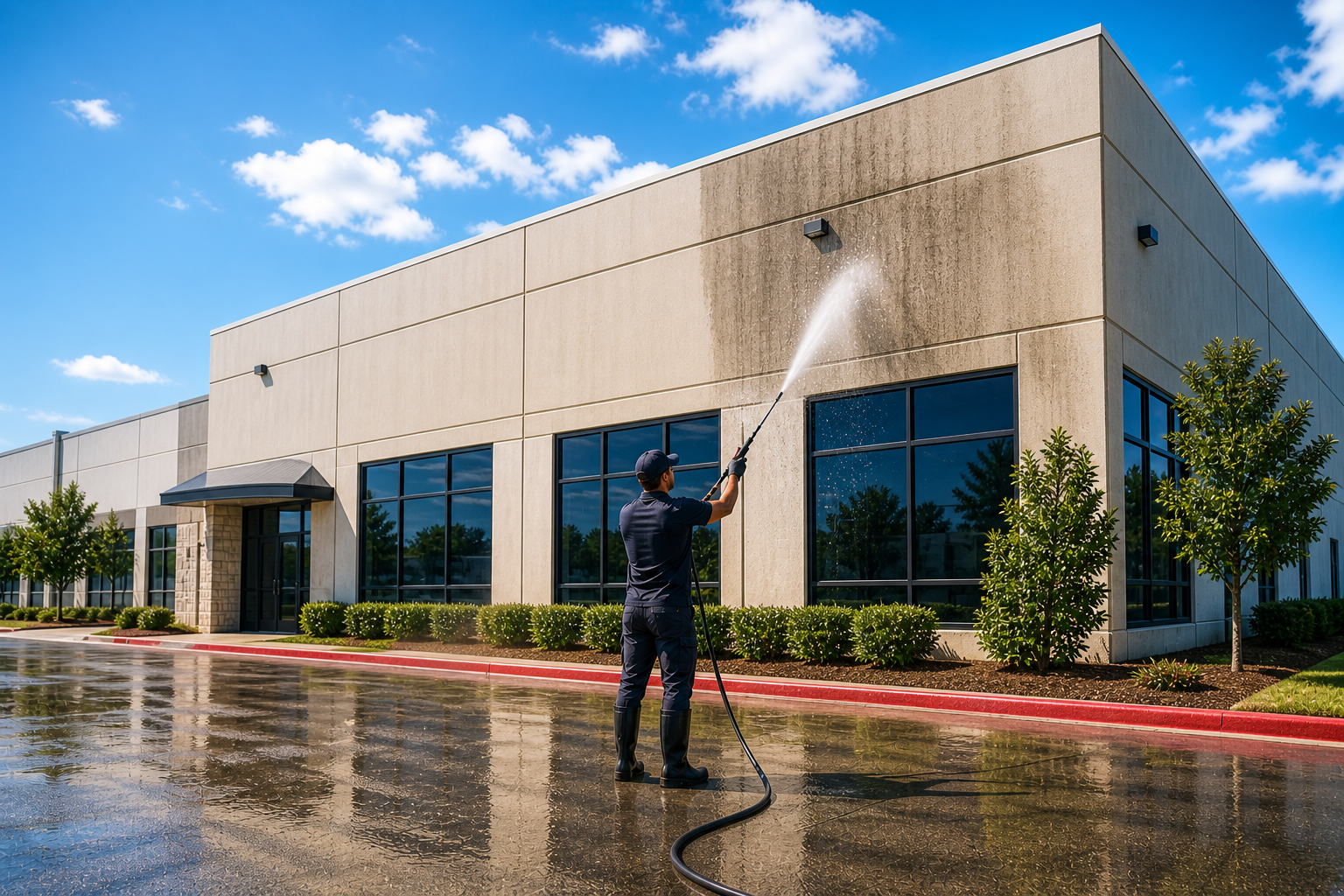
Florida's heat and moisture turn commercial walkways and walls into slippery breeding grounds for spores. When patrons slip or code enforcement steps in, property owners face massive expenses. Regular soft washing neutralizes mold mildew commercial liability issues by killing biological growth at the root before lawsuits develop.
Understanding Mold Mildew Commercial Liability in South Florida
When you manage commercial property in South Florida, exterior maintenance isn't just about curb appeal. It's a risk management priority. Mold, mildew, algae, and gloeocapsa magma thrive on our stucco, concrete walkways, and entryways. Left unchecked, these living organisms create dangerous conditions that directly impact your bottom line. Under Florida law, commercial property owners have a legal duty to maintain reasonably safe premises for customers, tenants, and visitors. When slick green film coats your high-traffic walkways, that layer transforms into a predictable hazard the moment an afternoon thunderstorm rolls through.
Premises liability claims in Broward County frequently center on slip-and-fall injuries caused by foreign substances on walking surfaces. In legal disputes, plaintiff attorneys aggressively target deferred maintenance. If water mixes with untreated algae near your entrance, courts often view that slick surface as foreseeable negligence rather than an unfortunate accident. Beyond personal injury lawsuits, property managers face municipal code violations, tenant lease disputes, and deteriorating property values when exterior surfaces harbor biological buildup. Choosing scheduled building washing keeps your surfaces clean, protects your visitors, and provides documentation that you take reasonable steps to keep your facility safe.
Davie Climate Quirks That Accelerate Commercial Contamination
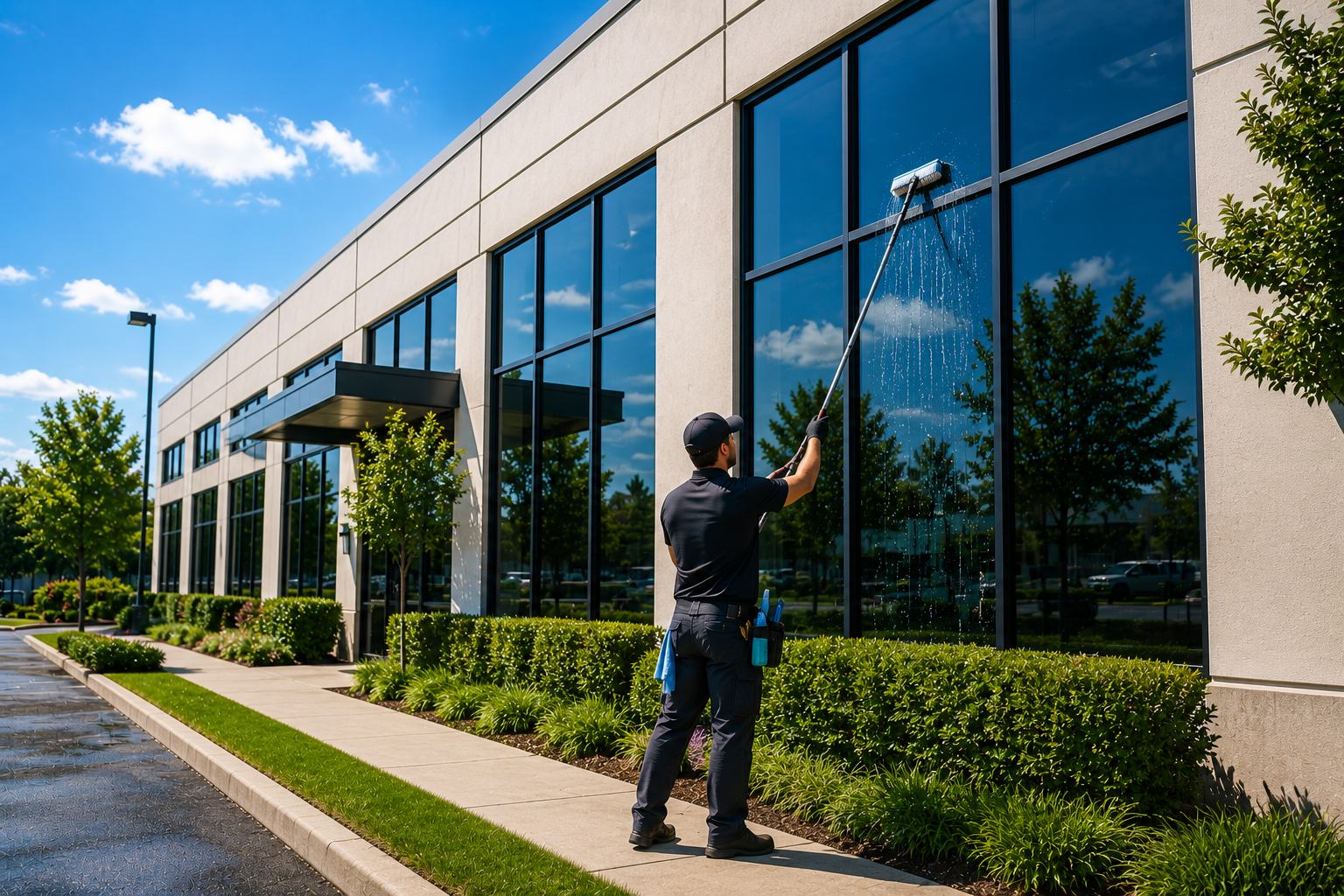
Commercial real estate in Davie faces a unique microclimate compared to eastern coastal cities. While coastal spots deal primarily with salt air, inland Davie blends heavy humidity with sprawling tree canopies and expansive water systems. Between the C-11 canal network, retention ponds, and dense live oaks, Davie properties stay damp long after the sun comes out. Neighborhoods along the University Drive business corridor and office parks near Nova Southeastern University sit under thick foliage that blocks airflow and sunlight. This constant shade traps morning dew and seasonal rain against your exterior walls and flatwork.
These conditions create an ideal environment for biological blooms. Moisture stays pinned against porous surfaces like split-face block, decorative coquina, and poured concrete. If you manage a retail center near Tower Shops or an equestrian-adjacent commercial park along Orange Drive, you also contend with organic dust, pollen, and runoff that feed bacterial spores. When severe weather hits, the problem worsens dramatically. Following major storms, moisture intrusion spikes across Broward County, as detailed in our guide on post hurricane commercial cleanup and insurance guide. Without deliberate intervention, biological growth takes over concrete walkways in weeks, driving up mold mildew commercial liability for unsuspecting owners.
Slip and Fall Hazards on High Traffic Commercial Walkways
Concrete seems permanent and indestructible, but its porous nature makes it a sponge for moisture. Algae and mold spores settle deep into these microscopic pores. In dry weather, they look like harmless dark smudges or green tinting. The moment humidity spikes or a typical Florida downpour hits, those dry spores swell with water, creating a slick, gelatinous layer. Walking across wet algae is comparable to stepping on a patch of black ice. For customers carrying shopping bags, employees carrying inventory, or elderly visitors using walking aids, that surface presents an extreme risk.
High-traffic areas require constant vigilance. Entrance ramps, ADA access routes, curbs, loading docks, and exterior stairwells represent primary risk zones. When dirty runoff pools near transition points, you have an accident waiting to happen. Routine parking lot cleaning and walkway treatments strip away these slick hazards, giving foot traffic the traction designed into the concrete. If you want to protect your tenants and customers before wet weather creates an incident, call us at +1 754-253-5827 for a same-day estimate.
Why High Pressure Washing Alone Does Not Solve the Problem
Many maintenance crews grab a commercial pressure washer, crank the unloader valve to 4,000 PSI, and blast away at black streaks on walls and sidewalks. While blasting provides immediate visual gratification, high pressure alone rarely solves mold mildew commercial liability risks. Blasting simply shears off the top layer of growth, leaving the microscopic root systems intact inside the pores of the masonry. Within two to three weeks, those organisms regenerate with greater vigor because the high pressure carved microscopic grooves that hold even more standing water.
Excessive water pressure also causes irreversible structural damage. High-pressure tips chew through painted stucco, gouge delicate storefront finishes, pit concrete, and strip protective aggregate away from flatwork. In Davie, where many retail and medical plazas feature decorative architectural details, hard blasting strips away waterproofing coatings, leading to internal moisture leaks and costly repairs. While salt exposure remains a factor across South Florida as explored in our guide on coastal building maintenance and salt spray in Broward, mechanical pressure damage is entirely self-inflicted by well-meaning but ill-equipped cleaning crews.
The Soft Wash Process That Neutralizes Liability
Soft washing solves the biological problem at its root without tearing up your property. Instead of relying on destructive mechanical pressure, our soft wash process uses low-pressure application pumps delivering specialized, eco-responsible sanitizing solutions. These solutions penetrate the microscopic pores of your building surfaces, killing the spores, lichen, and bacteria on contact. By neutralizing the biological colonies chemically, we eliminate the organism entirely rather than just giving it a haircut.
Once the solution breaks down the organic matter, we rinse the area with gentle, high-volume water flow, washing away the residue and leaving behind a sanitized surface that resists rapid regrowth. This process is safe for painted surfaces, commercial roof membranes, delicate awnings, EIFS exterior systems, and surrounding landscape beds. Soft washing delivers a clean that lasts four to six times longer than standard pressure washing. That extended lifespan means fewer disruptions for your business, lower annual exterior maintenance costs, and unbroken protection against surface slip claims.
Common Commercial Property Maintenance Mistakes to Avoid
Facility managers often make simple errors that inadvertently increase their liability exposure. The most frequent mistake is adopting a reactive maintenance strategy. Waiting for a tenant to complain, an insurance inspector to dock points, or a code enforcement officer from the Town of Davie to issue a citation puts you behind the curve. Once mold is thick enough to warrant a violation, it has likely already created a slip hazard for weeks.
Another mistake involves hiring unlicensed, underinsured handymen to tackle commercial exteriors. If an uninsured contractor slips off a ladder or damages customer vehicles with drifting chemicals, you inherit that liability. Professional commercial contractors carry dedicated general liability policies, workers' compensation coverage, and proper containment gear. If you'd rather skip the ladder and safeguard your property, book a free quote and we'll handle it with licensed precision. Finally, never allow maintenance workers to use unbuffered bleach solutions near retail entrances without proper neutralization, as dried chemical salts can pit concrete surfaces and kill surrounding landscape plants.
Cost Expectations and Recommended Service Frequencies
Budgeting for commercial soft washing depends on square footage, surface complexity, access requirements, and existing biological contamination. For standard commercial flatwork, sidewalk treatments and building soft washing packages typically feature pricing starting at $0.15 to $0.30 per square foot for large properties, with individual storefronts or multi-tenant pads starting at $350 to $750 per visit depending on total footprint. Investing in preventative treatments costs a fraction of a single slip-and-fall settlement or the deductible on a general liability claim.
For facilities in Davie, your physical location dictates cleaning frequency. Properties located along dense tree lines or adjacent to retention canals require service every three to four months to keep sidewalks compliant and safe. Open retail centers exposed to full sunlight can often maintain clean, compliant surfaces with semi-annual service scheduled twice a year. Scheduling a wash immediately before hurricane season clears out spores, while a post-storm maintenance cycle clears debris and organic moisture before it settles into the building envelope. Partnering with a dedicated exterior cleaning service ensures your property stays clean, safe, and protected year-round.
Wrapping up
Keeping your commercial property free of mold, algae, and grime isn't just about making a great impression on Davie customers. It's an essential defense against premises liability claims, costly repairs, and municipal fines. When you partner with Coastal Surface Experts, our trained technicians use proven soft washing techniques to eradicate biological growth and protect your concrete, stucco, and roofing. Protect your business, safeguard your visitors, and maintain your investment by scheduling an on-site assessment today. Reach out to our team to book a free quote and let us handle your commercial exterior care.