Parking Lot Sweeping vs Pressure Washing in Margate
November 10, 2026
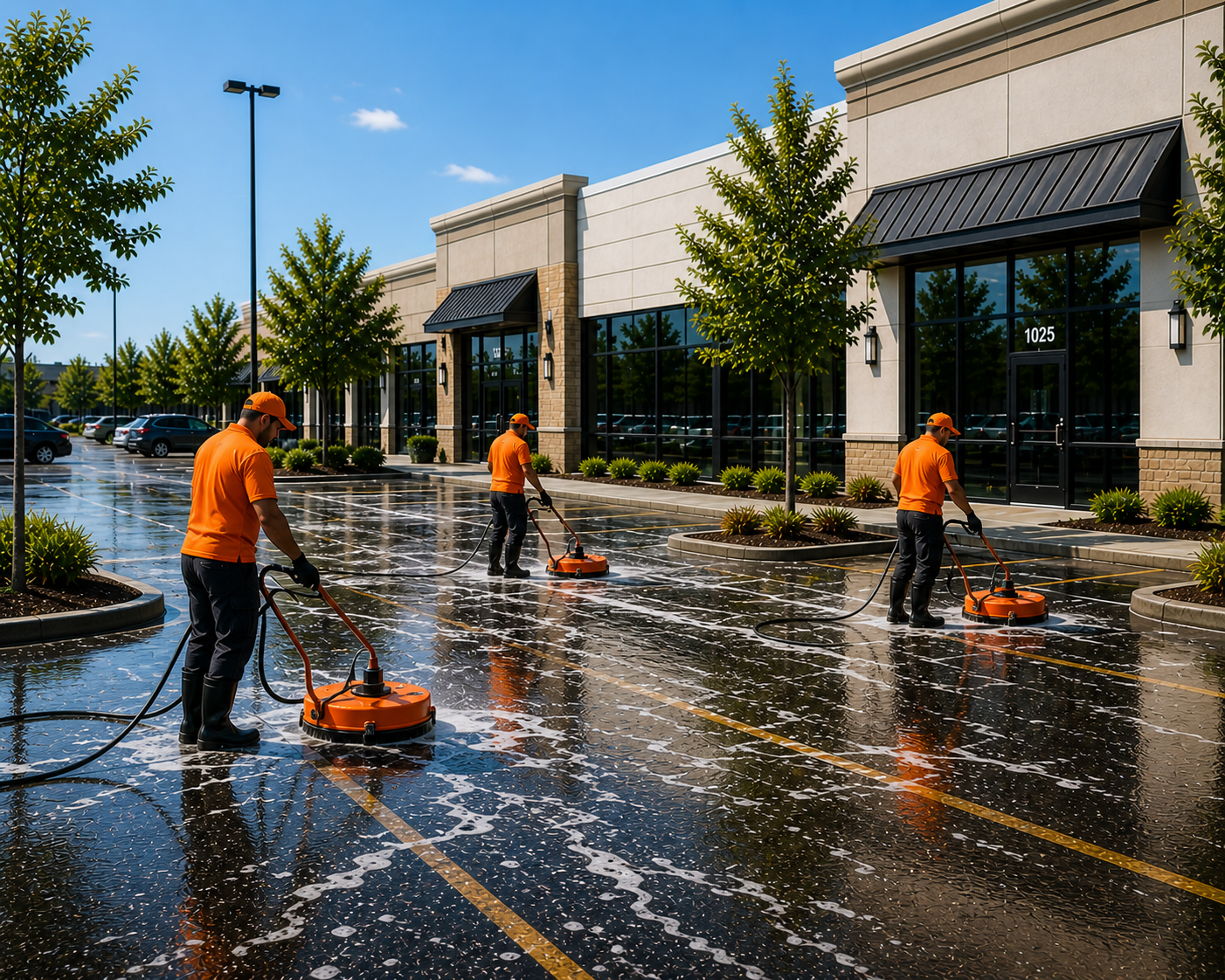
Parking lot sweeping and pressure washing serve two distinct maintenance goals for commercial properties in Margate. Sweeping clears loose trash, sand, and storm debris to protect catch basins, while pressure washing lifts embedded motor oil, slippery algae, and food grease from concrete and asphalt. Using both on a coordinated schedule keeps your pavement clean, safe, and fully compliant with Broward County stormwater codes.
The Fundamental Difference Between Sweeping and Pressure Washing
Property managers often treat surface care as an either-or decision, but sweeping and deep washing tackle completely different problems. Parking lot sweeping uses mechanical brooms and vacuum trucks to collect dry surface debris like palm fronds, gravel, food wrappers, and loose sand. It cleans the top layer of your lot before cars crush trash into fine powder or winds scatter it into landscape beds.
Pressure washing uses pressurized water streams, heated water systems, and targeted cleaning solutions to release substances that bond directly to your asphalt and concrete. Think about the dark stains near parking stops where customer engines drip oil, or the sticky puddles left behind shopping center curbs. A sweeping truck will drive right over those spots without lifting a bit of the stain. When you want deep pore extraction for commercial properties across Margate, high-pressure water and commercial degreasers do the real heavy lifting.
Sweeping acts as daily or weekly hygiene for your exterior, while pressure washing delivers deep sanitization and stain removal. If you run a vacuum over your carpet, you pick up crumbs and pet hair, but you still need hot water extraction to remove spilled coffee. Pavement works the exact same way.
Why Margate Weather Demands Both Services
Margate sits right in the heart of northern Broward County, where subtropical climate quirks create unique headaches for commercial facilities. Between June and November, sudden afternoon thunderstorms drop inches of rain in less than an hour. If loose tree litter, bottle caps, and sandy soil sit on your asphalt near Margate Boulevard or along State Road 7, that rushing rainwater pushes all of it directly into your storm grates. When storm drains clog, parking stalls flood fast, creating safety hazards and liability risks for your tenants.
At the same time, high humidity and direct South Florida sunlight turn every dropped organic particle into a food source for black mold and green algae. In shaded parking stalls near apartment complexes in Coral Gate or retail plazas by Royal Palm Boulevard, damp pavement grows algae slicks within days. Algae creates an immediate slip hazard for shoppers stepping out of their cars. Sweeping trucks cannot remove slick surface algae, and their rotating nylon brushes simply polish the slippery film.
Our intense summer heat also bakes vehicle fluids deep into porous pavement. Motor oil, transmission fluid, and radiator coolant break down the petroleum binders in asphalt, leading to soft spots, crumbling aggregate, and expensive potholes. Routine sweeping clears away the dry grit, but only thorough commercial parking lot cleaning neutralizes and extracts the corrosive chemical residues.
When Parking Lot Sweeping Is Your Best Choice
Sweeping shines as your regular defense against loose debris buildup. You want sweeping services running several times a week or even nightly if you manage high-traffic retail centers, grocery store plazas, or busy office parks. Sweeping keeps your curb lines sharp, catches windblown litter before neighbors complain, and extends the lifespan of your pavement striping by removing abrasive sand that grinds paint away under car tires.
Sweeper trucks are fast and dry. They move across several acres of asphalt in a couple of hours without disrupting business operations or requiring customer detours. They run quietly late at night or before dawn without leaving standing water that could track into storefronts.
Sweeping is also an essential prep step before any major exterior project. If your lot needs sealcoating, striping, or deep pressure washing, you must clear the loose aggregate first. Sweeping clears away the grit so our technicians can target embedded grime without pushing dry gravel around with high-pressure wands. If you need help building a recurring maintenance plan, call us at +1 754-253-5827 for a same-day estimate.
When Pressure Washing Becomes Essential
You need pressure washing whenever a contaminant changes the color, texture, or safety profile of your ground surfaces. Sweeping trucks remove loose cups, but they cannot lift the black circles of discarded chewing gum dotting the concrete sidewalk outside your anchor tenant. They cannot dissolve greasy diesel exhaust films near loading zones, and they definitely cannot cut through rancid grease trails behind restaurants.
Food service corridors and multi-tenant centers need hot-water washing to eliminate slip hazards and pest attractants. A sweep truck sweeping past a corralling area does nothing for leaking grease bins, but dedicated dumpster pad cleaning uses 200-degree water and commercial surfactants to sanitize the concrete and wash away foul odors.
You should also schedule pressure washing ahead of major property inspections, tenant lease handovers, and fresh pavement marking projects. New traffic paint will not stick to an oil-soaked parking bay. If you would rather skip the guesswork and get your property in top shape, book a free walk-through and we will handle it.
Environmental Rules and Stormwater Runoff in Broward County
Commercial property managers face strict environmental regulations regarding what enters local waterways. In Margate, stormwater runoff flows through municipal catch basins into canal networks connected to the C-14 canal system. The Broward County Environmental Protection and Growth Management Department enforces clean water regulations designed to keep petroleum products, grease, and harsh detergents out of our surface waters.
Sweeping actually serves as your primary defense for stormwater permit compliance. By picking up dry contaminants and sediment before heavy rains fall, you stop solid pollutants from entering the municipal storm system. Many industrial parks and commercial complexes maintain detailed sweeping logs to satisfy local stormwater pollution prevention plans.
Pressure washing, however, requires strict wastewater management protocols. You cannot simply blast greasy parking stalls and let chemical-laden wash water flow into the nearest street drain. Professional teams use wash water containment berms, drain covers, and vacuum recovery systems to capture wash water for compliant disposal. Hiring an amateur who lacks recovery gear can trigger heavy municipal fines for illegal discharge.
How Coastal Surface Experts Handles Commercial Lots
We treat your exterior surfaces as valuable commercial investments that protect property values and tenant retention. We never show up with residential equipment or rely on cold-water wand blasting that leaves permanent wand marks etched into your concrete. Our commercial rigs utilize dual-operator commercial surface cleaners that spin balanced spray bars at uniform heights, delivering clean, streak-free surfaces across thousands of square feet.
We adjust water pressure and temperature depending on whether we treat delicate asphalt or dense poured concrete. High pressure can blow apart aging asphalt that has lost its binding tar, so we use lower pressure paired with specialized citrus degreasers and biological stain removers that float oils out of the asphalt pores without aggregate loss. For concrete walkways and curbs, we dial up the heat and pressure to lift deeply set tannin stains and gum wads.
We coordinate seamlessly with your existing sweeping contractors or grounds maintenance crews. If you manage a retail center, office park, or residential community, check out our HOA cleaning contract guide and scope checklist to see how multi-service property scopes protect budgets and maintain clean curb appeal across the entire year.
Commercial Maintenance Costs and Scheduling Frequencies
Because sweeping and pressure washing solve different maintenance challenges, your service schedules and budgets should reflect those differences. Most Margate commercial centers run parking lot sweeping on a weekly, bi-weekly, or monthly contract depending on traffic volume. Professional sweeping packages for small to mid-sized strip centers generally feature rates starting at $250 per month for scheduled visits.
Commercial pressure washing operates on a quarterly, bi-annual, or annual cycle depending on the specific zone. High-traffic storefront walkways, drive-through lanes, and dumpster areas require quarterly or bi-monthly washings. Main parking stalls and drive aisles usually need deep washing once or twice a year to remove rubber tire marks, oil slicks, and seasonal algae growth.
Commercial pressure washing pricing reflects total square footage, water source availability, grease severity, and wastewater recovery requirements. Routine surface washing for commercial parking facilities typically features rates starting at $0.08 per square foot for large open acreage, with separate line items for heavy degreasing on concentrated oil spots. If you manage residential communities, our guide on apartment complex pressure washing schedules explains how building walkways and parking zones balance out seasonal grime.
Wrapping up
Balancing parking lot sweeping with routine pressure washing protects your pavement, keeps tenants happy, and ensures full environmental compliance across Broward County. If your property needs stubborn oil stains removed, algae washed away, or walkways refreshed, get in touch with our team today. Visit our contact page to book a free walk-through and custom estimate for your facility.