Parking Lot Sweeping vs Pressure Washing for Broward Lots
October 20, 2026
Sweeping removes dry debris, leaves, and loose trash to keep commercial parking lots clean on a weekly basis. Deep pressure washing cuts through embedded motor oil, gum, algae, and grime that sweeping trucks leave behind. Combining routine sweeping with quarterly or semi-annual commercial pressure washing protects asphalt, prevents slip hazards, and keeps your Broward County property looking sharp.
The Core Differences Between Sweeping and Pressure Washing
When you manage a commercial property in Broward County, your parking lot creates the very first impression for every tenant, customer, and delivery driver who arrives. Property managers often ask us whether they should contract a street sweeper or hire a washing crew. The truth is that parking lot sweeping vs pressure washing isn't an either-or decision. They solve two completely different problems, and relying on one while ignoring the other leaves your pavement vulnerable to premature wear and serious liability risks.
Sweeping is dry, mechanical surface maintenance. A sweeping truck or ride-on sweeper uses rotating brooms and high-powered vacuum intake tubes to collect loose trash, gravel, sand, and leaves. It keeps the lot tidy and stops litter from blowing into storm drains. Sweeping cannot, however, lift petroleum stains, dissolve chewing gum, or scrub away slick biological growth.
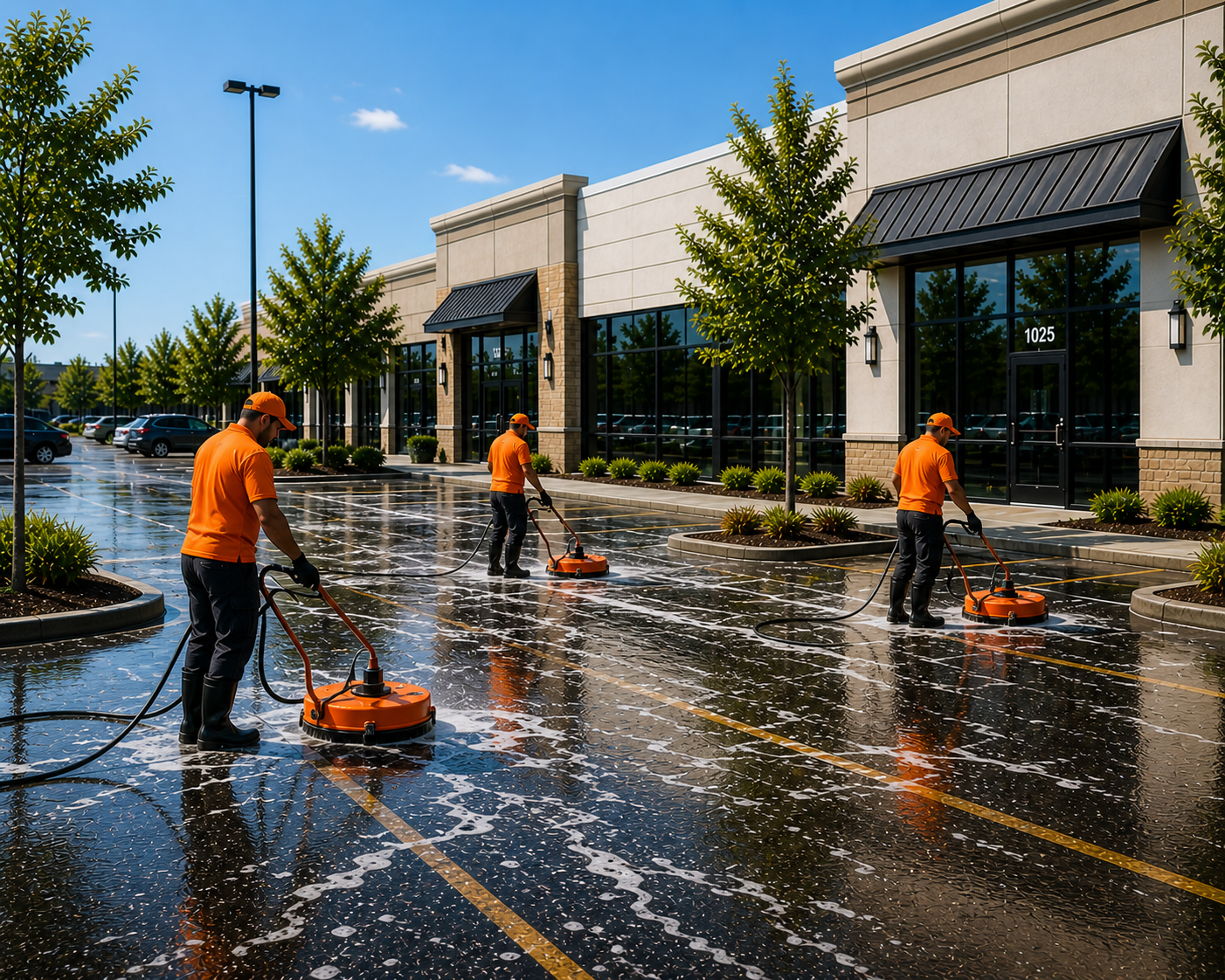
Pressure washing uses pressurized hot water, specialized chemical detergents, and commercial rotary surface cleaners to flush contaminants out of the pavement's pores. Through professional commercial parking lot cleaning, you eliminate slippery mildew, hydraulic fluid, engine oil, grease, food spills, and tire marks. Sweeping handles the bulk debris on top of the surface, while pressure washing restores the material itself.
Why South Florida Weather Complicates Pavement Maintenance
Running a commercial facility in Pompano Beach, Fort Lauderdale, or Hollywood comes with unique environmental headaches. The subtropical climate speeds up pavement degradation in ways northern contractors never encounter. Intense ultraviolet rays bake the asphalt year-round, expanding the pores and softening asphalt binders. When parked cars drip motor oil, steering fluid, and coolant onto heated asphalt, those petroleum products quickly dissolve the tar binders beneath the aggregate.
Our coastal humidity and daily summer downpours make things worse. Warm, damp asphalt creates the perfect breeding ground for green algae, black mold, and cyanobacteria. If you only sweep your lot, you leave a film of slick organic matter sitting directly on the surface. During an afternoon cloudburst, that invisible algae layer turns into a sheet of ice. A customer walking from their car to your storefront can easily slip and fall, opening your business up to costly premises liability claims.
Salt air blowing in from the Atlantic adds another layer of trouble. Airborne salt crusts settle into the micro-crevices of concrete curbs, parking stops, and walking surfaces. Sweeper brooms merely kick these corrosive particles into the air. Only targeted hot-water washing dissolves salt residue, neutralizes coastal grime, and safely pushes runoff into proper filtration zones.
When to Schedule Commercial Parking Lot Sweeping
Sweeping is your everyday defense against litter, aesthetic clutter, and stormwater violations. If you run a high-traffic retail plaza, grocery store, or medical center in Broward County, trash collects quickly. Food wrappers, paper receipts, coffee cups, and discarded bottles gather in parking stalls and curb lines within hours. Left unaddressed, wind pushes this litter straight into retention ponds and city storm sewers, which can trigger municipal fines.
Schedule mechanical sweeping on a frequent, predictable cadence. Most busy commercial strip centers benefit from sweeping two to five nights per week. Low-traffic office parks or industrial warehouses in Oakland Park or Coral Springs can usually get by with once-a-week or bi-weekly sweeps.
Sweeping also acts as essential prep work before severe weather. When tropical storms or hurricanes threaten South Florida, clearing fallen tree branches, palm fronds, gravel, and loose debris keeps those items from turning into airborne hazards. Call us at +1 754-253-5827 if you need a quick assessment of your pavement conditions before hurricane season hits.
When Deep Pressure Washing Becomes Necessary
While sweeping keeps your property presentable on a day-to-day basis, sweeping trucks will never strip away oil slicks, dark pedestrian wear patterns, or flattened chewing gum. That is where deep hot-water washing takes over. You need commercial pressure washing whenever contaminants bond chemically or mechanically to the concrete or asphalt.
High-spill areas demand deep washing on an aggressive schedule. Fast-food drive-through lanes, dumpster pad surrounds, loading docks, and entrance sidewalks accumulate grease and food residue that brooms simply smear around. Similar to the strict protocols covered in our guide on gas station forecourt cleaning degreasing and compliance, commercial pavement requires commercial-grade surfactants and hot water to emulsify oil so it doesn't rot the pavement.
Pressure washing is also non-negotiable before major maintenance projects. If you plan to apply asphalt sealcoating, fill structural cracks, or restripe parking spaces, the surface must be 100% free of dirt, oil, and loose chalk. If you apply fresh striping paint over an oily or dirty surface, the paint will peel away within weeks under the South Florida sun.
The High Cost of Cutting Corners on Surface Care
The biggest mistake property managers make is treating sweeping as a replacement for pressure washing. We frequently see retail centers that have contracted nightly sweeper trucks for five years straight without ever washing the pavement. From a distance, the lot looks clear of paper trash. Up close, the parking bays are black with oil pools, the curbs are coated in dark mold, and hundreds of black gum wads litter the walkways. Sweeper brushes actually drag oil spots outward, creating wide, unsightly smears across the asphalt.
Another expensive mistake is handing a cold-water homeowner pressure washer to an on-site maintenance employee. Consumer-grade machines operate at low flow rates and cannot heat water. Spraying grease with cold water without proper chemicals just splashes oily film across the lot and often etches deep wand lines into the surface that ruin the look of the concrete forever. In multi-tenant environments, building an organized schedule prevents these costly blunders. We outline how to structure these intervals in our article on apartment complex pressure washing build a smart maintenance schedule.
If you want a tailored schedule that protects your investment, book a free quote and our team will walk your site to point out high-risk areas.
How Coastal Surface Experts Cleans Commercial Pavement
At Coastal Surface Experts, we treat parking lot cleaning as a science. We don't just blast water across your asphalt. Asphalt is softer than concrete, especially when the Florida sun pushes surface temperatures past 140 degrees. Hitting hot asphalt with high-pressure wands gouges the surface and dislodges the stone aggregate. We adjust our equipment, nozzle sizes, and chemical concentrations to deliver safe, effective results without damaging your pavement.
We bring industrial, trailer-mounted rigs equipped with continuous hot-water burners capable of reaching 200 degrees. We pretreat heavy oil slicks, diesel spills, and food spills with commercial-grade, biodegradable degreasers that break down grease molecules on contact. Then, our technicians use 30-inch rotary surface cleaners to deliver balanced, consistent cleaning without zebra-striping. Check out our company background on why customers choose us to see how our commercial equipment outperforms standard vendor setups.
We also manage water runoff in strict compliance with local Broward County stormwater ordinances and Clean Water Act rules. We block storm drains, berm runoff zones, and reclaim wash water using specialized vacuum recovery systems so oily water never reaches the local aquifer or canal system.
Recommended Maintenance Schedules and Budget Planning
To maximize your maintenance budget, synchronize your sweeping and washing operations. Routine sweeping extends the time between pressure washing visits, while pressure washing keeps the surface clean enough that sweeper trucks don't kick up black dust clouds during their nightly rounds.
For most Broward County retail centers, office parks, and commercial plazas, we recommend this standard schedule:
1. Mechanical Sweeping: One to three times per week to capture litter, plant matter, and loose gravel. 2. Sidewalk and Entrance Pressure Washing: Monthly to remove soda spills, chewing gum, and slick grime at building access points. 3. Full Parking Stall and Drive Lane Pressure Washing: Every six to twelve months, scheduled overnight to minimize disruption to tenants and customers.
Commercial cleaning investments vary based on square footage, surface type, oil contamination, and water access. Standalone dumpster pads or small drive-through lanes usually carry services starting at $250. For larger commercial lots, professional surface cleaning generally runs on a sliding scale starting at $0.05 to $0.15 per square foot. We work with clients across all our areas served to create recurring contracts that reduce per-visit costs while maintaining pristine curb appeal year-round.
Wrapping up
Balancing routine sweeping with seasonal pressure washing keeps your commercial pavement safe, durable, and visually appealing. Sweeping collects the surface trash, while hot-water pressure washing attacks the embedded grease, algae, and grime that damage your investment. If your Broward County property needs a clean sweep or a deep surface restoration, reach out to our team for a free quote and let Coastal Surface Experts handle the heavy lifting.